

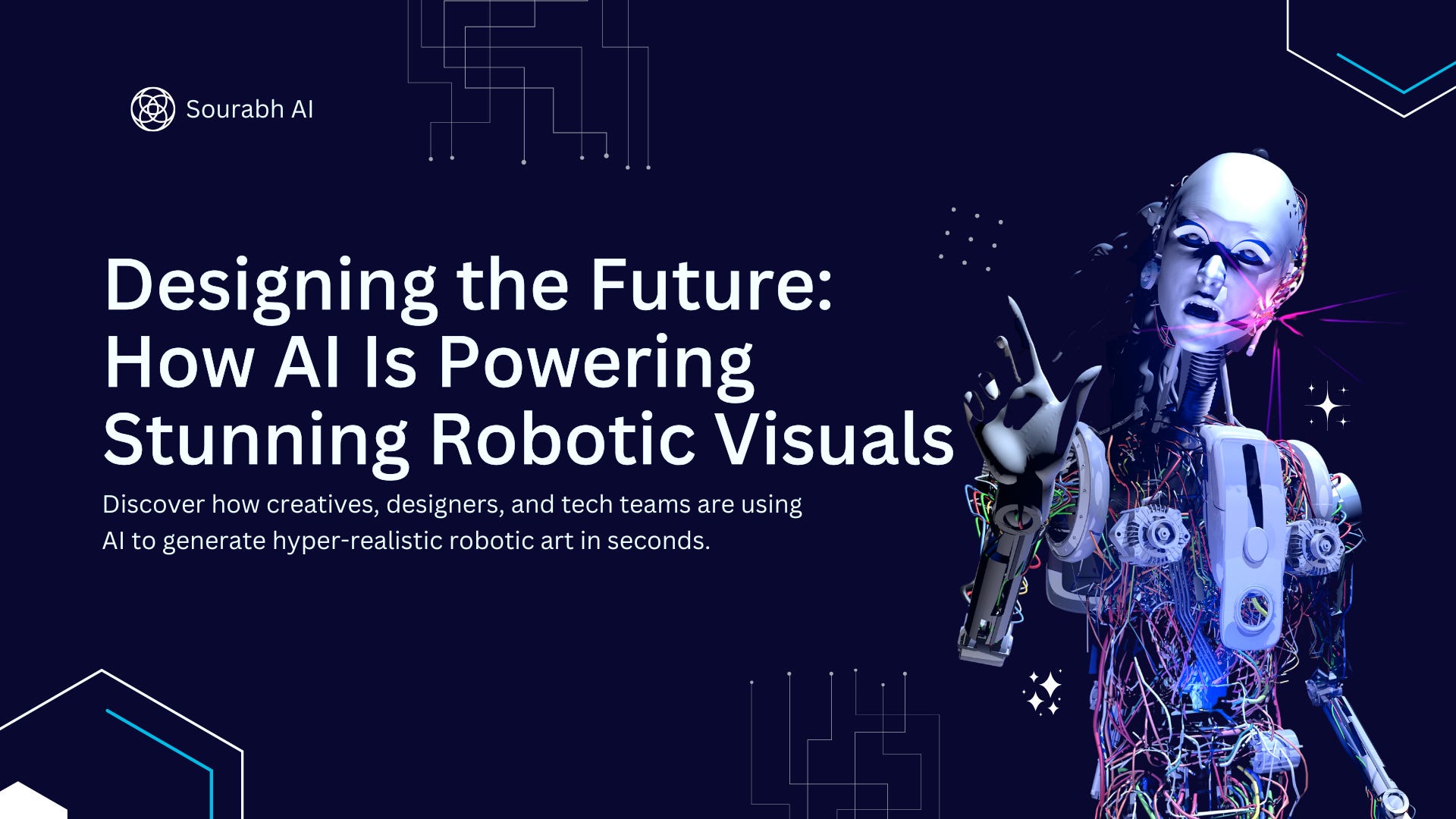
Designing the Future: How AI Is Powering Stunning Robotic Visuals
Discover how creatives, designers, and tech teams are using AI to generate hyper-realistic robotic art in seconds.

Hey AI Techies,
Welcome back to another powerful edition of Sourabh AI. Today, we dive into one of the most visually captivating applications of artificial intelligence: AI-generated robotic visuals.
From high-concept sci-fi characters to sleek commercial prototypes, AI is becoming the ultimate creative assistant for anyone designing robots and the results are stunning.
How Designers Use AI to Build Robotic Concepts in Seconds
Gone are the days when creating a robotic concept required hours of 3D modeling or sketching. Now, AI image-generation tools allow designers to:
Convert text prompts into high-quality visuals in under a minute
Experiment with hundreds of iterations without extra cost
Explore futuristic designs with creative freedom unshackled by technical skill
For example, a prompt like "a hyper-realistic humanoid robot with chrome plating and neon-blue joints in a cyberpunk city" can generate artwork fit for a AAA video game or a sci-fi film poster in seconds.
Best Tools for Creating Metallic Textures, Dynamic Poses & Cinematic Lighting
If you're looking to generate robotic art that looks polished and professional, these AI tools are leading the charge:
Midjourney: Known for its cinematic composition and fine texture details. Great for capturing dramatic lighting and mechanical realism.
DALL·E 3: Ideal for more controllable prompts, branding styles, and story-based visuals. You can even edit generated images in-paint style.
Leonardo.Ai: Emerging as a top-tier choice for concept designers, especially those creating robotics, armor, or mecha-style assets.
Kaiber & Pika: These tools let you animate your robotic concepts, turning static images into short cinematic clips.
Want those chrome textures to shine or those joints to articulate in action? These tools get the job done.
Real-World Use Cases: Gaming, Hardware, and Digital Campaigns
AI robotic visuals are not just eye candy. They're being put to work across industries:
Gaming Studios: Pre-visualize robotic characters and weapons before handing over to 3D artists.
Hardware Startups: Prototype robots, drones, and IoT devices visually for pitch decks and investor demos.
Ad Agencies: Create high-impact visuals for tech campaigns, product teasers, and futuristic storytelling.
Educational Platforms: Use friendly or intimidating robot characters for STEM-based content, explainer videos, and kids' apps.
This creative revolution is also helping solo founders and indie devs save thousands of dollars on concept art.
Final Thought
We often think of AI as a tool for code and content. But it’s also an imagination machine. When it comes to robotic visuals, AI doesn’t just generate images—it generates possibilities.
Whether you're building your own Iron Man suit or crafting visuals for your next pitch, AI gives you a head start in design without compromising quality.
Let me know if you'd like a follow-up guide with prompt templates and asset packs to help you generate your own robotic visual library.
About the Author
Sourabh Joshi is an author and educator. He has an M.Tech in Computer Science. His focus is on artificial intelligence and data engineering.
He is a LinkedIn Top Voice in Computer Science and Data Engineering. He offers valuable technical insights and real-world views on AI advancements.
Sourabh Joshi founded the Sourabh AI newsletter. Many professionals and tech fans follow it for trusted AI insights.